911爆料网

News

Keys to growth: Basic research in AI is like long-term investing

This article series tells the story of Aalto鈥檚 work as a builder of a better society.
Basic research in artificial intelligence (AI) doesn鈥檛 always generate quick wins or clickbait headlines, but its benefits can be seen throughout society. Together with partners, Samuel Kaski, director of ELLIS Institute Finland and 911爆料网 professor, is developing AI that is cooperative and applicable, and potentially capable of transforming research and product development.
Illustrated woman with orange hair points at pixelated screen with binary code. She is wearing a sleeveless dress.
Many popular AI tools only work well when they are used in conditions that resemble the AI algorithm鈥檚 training data. Illustration: Yutong Liu & Kingston School of Art / https://betterimagesofai.org

Kaski often gets asked, what is the unique selling point of ELLIS Institute Finland, the new AI research center that he directs. 

The answer is perhaps not as exciting as one could hope. 

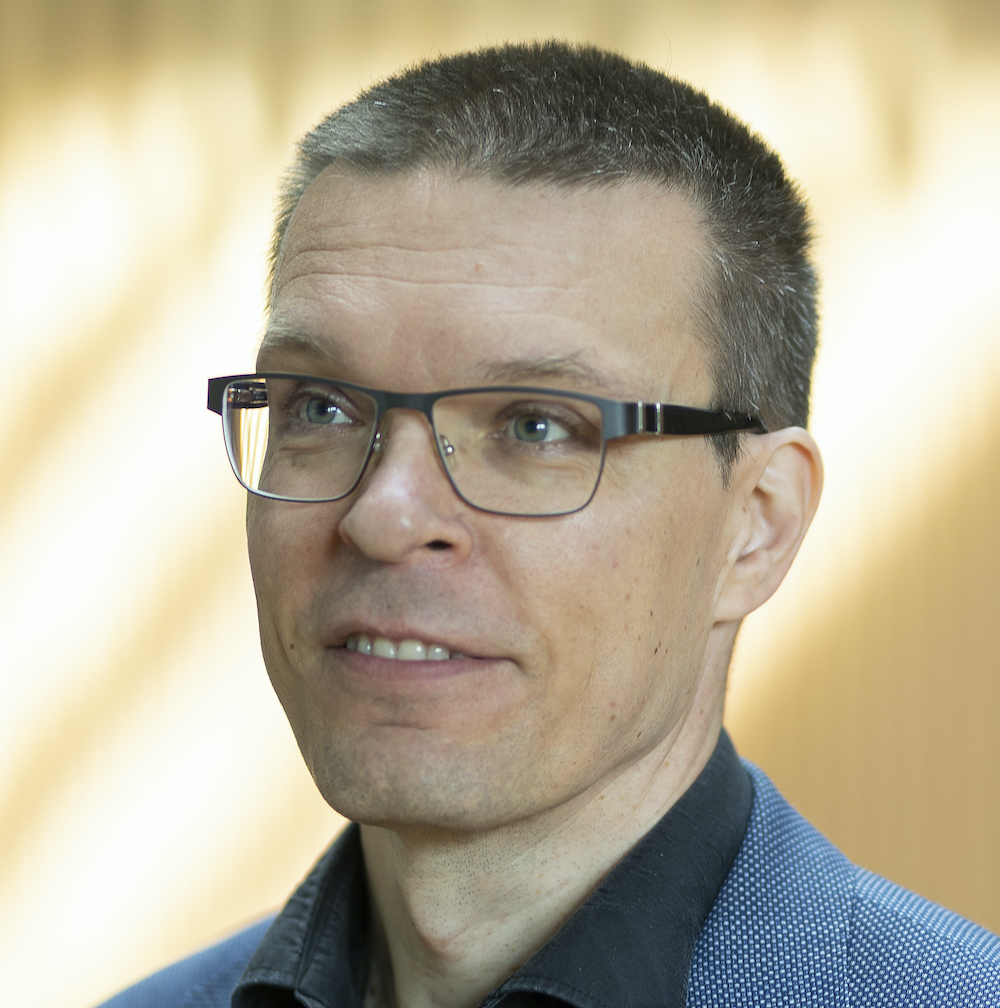
A person wearing a grey suit and black shirt. The background is blurry and appears to be indoors.

鈥楤asic research,鈥 Kaski says. 

鈥楩ocusing on one application area would be short-sighted, because no one has a crystal ball when it comes to AI development. We have to achieve things that others can鈥檛 even think of, that鈥檚 the imperative. If we succeed, it can lead to a revolution. But if those revolutions don鈥檛 come, we have talented people working on the next opportunities. Basic research is like long-term, diversified investing: if you do it enough, over time you鈥檒l get good results.鈥 

A faster loop 

ELLIS Institute Finland is the newest expansion of the , a network of the top AI researchers in Europe. The institute launched this year with support from Finland鈥檚 Ministry of Education and Culture and Foundation PS, an organization established by AMD Silo AI CEO Peter Sarlin

All universities in Finland are partners of the institute, which also works closely with industry and international counterparts. 

Even within basic research, the institute has priorities, Kaski adds. 

鈥榃e focus on the basic research of making AI more applicable. How can we ensure that machine learning algorithms can best be made useful?鈥 

This is also the core of a new project led by Kaski, which was awarded the highly competitive European Research Council (ERC) Advanced Grant this year. The goal is to create new types of machine learning that can be widely applied across fields, with humans and AI solving problems together.  

Many popular AI tools actually only work well when they are used in conditions that resemble the AI algorithm鈥檚 training data. This is why current AI tools aren鈥檛 good enough for research and development, where something totally new is created and you inevitably go beyond the existing data.  

R&D activities often follow the same formula: design, build, test, learn. 

鈥業f we can improve this cycle with AI and make it either automatic or incorporate the human expert into the loop, it could have huge effects across fields, from screening drug molecules to developing energy solutions,鈥 says Kaski. 

For AI to become a truly useful partner to human users, it first needs to acquire what psychologists call a theory of mind鈥攊t must understand the partner鈥檚 goals, which may not be directly evident. 

This requires cooperation from experts across fields.  

Understanding and optimism 

Professor Andrew Howes answers the Teams call from Exeter, England. 

Howes is a cognitive scientist specialising in human-computer interaction. He works closely with many AI researchers at Aalto, and during the 2020-2021 academic year was a visiting researcher at the Finnish Center for Artificial Intelligence FCAI, the predecessor of ELLIS Institute Finland. 

A person with grey hair wearing a beige jacket and light blue shirt.

鈥業'm incredibly excited about the progress that we've made recently in human-AI cooperation. We know how to build a working model of human decision-making and behaviour and apply it to individuals with the help of the latest machine learning methods. The next step is to find the application areas that will most benefit and impact society,鈥 he says. 

The model is easy and quick to scale, because it can be tailored to each use case with just a few extra data points. Howes emphasizes, however, that though they believe the model can work in many different tasks, in real-world conditions there will surely be challenges. 

鈥楾ake for example decision-making at the doctor鈥檚 office. A diagnosis is just the start, because a doctor must also understand the patient's needs and desires, and the patient also needs a clear picture of their own situation, as well as the different treatment options. Decisions are not made just based on information, but also preferences,鈥 Howes says and stresses that decision-making power is not transferred to the AI model. The point is to get people who are making decisions to better understand each other. 

鈥楢 cooperative AI works for people and with people. An AI system can have a huge amount of computational power, but it's the person who always knows the context, everyday life, the past and the future, a lot of which is beyond the AI's understanding.鈥 

AI is definitely a technology that will help us flourish and develop in all areas of society.

Professor Andrew Howes

Howes also has a business idea based on extreme personalization of services with the help of AI. Normally, customers are categorized for example by age, gender, education or occupation. 'Our idea is to serve the needs of the individual, not the category.'  

And what does Howes think about the conversation going on in England, Finland and around the world鈥攚ill AI take all the jobs? 鈥業'm definitely an optimist,鈥 he smiles. 

鈥楾he development of AI has been fast, and the labour market and businesses will of course change. To me, AI is definitely a technology that will help us flourish and develop in all areas of society. I believe that AI can also help us understand each other better. In the worst-case scenario, individuals are working only with AI, not with each other. In another scenario, the AI does the groundwork so that experts from different fields have the opportunity as a team to find the best possible solution for a customer or societal needs.鈥

Science is the best tool  

The first six months at the ELLIS Institute have been busy. The first principal investigators have been hired, and a new round of recruitment for researchers will start this fall. The global tech giants are competing for AI expertise with million-dollar salaries. Finland can't match those numbers, but when it comes to doctoral education in AI, for example, thousands of people applied from around the world. 

What is Finland鈥檚 key advantage? 

鈥楢I research started early in Finland and pioneers like Teuvo Kohonen built Finland's reputation as a forerunner in this field. Achievements of the past, of course, aren't enough, but we've done a lot of work and the right things,鈥 Kaski says. 

Science is the best problem-solving tool that humanity has

Professor Samuel Kaski

World-class computational resources like the LUMI supercomputer, as well as Finland's reputation as a safe, functional and egalitarian country, are factors that attract AI researchers from abroad.  

AI development shouldn't be seen as a competition between nations though, Kaski cautions. 鈥業f I want to get the best possible results, why would I just do that in my own bubble when I can choose the best partners from anywhere?鈥 

Doing basic research is more independent and longer term at a university than in a company, and to Kaski that itself is an important motivator. 

鈥楽cience is the best problem-solving tool that humanity has. If we can improve how science is done using better applicable AI across fields, the combined effect will be huge. To me that is the greatest feature of AI.鈥

Text: Minna H枚ltt盲
Translation: Amanda Alvarez
Photos: Matti Ahlgren and Andrew Howes

New Fundamentals: ELLIS Institute Finland launches with bold scientific ambitions

AI and ML for transforming R&D, enhancing human-AI teamwork, and creating exciting new science

Read more
Group of people standing in a room holding a ribbon, with presentation screen and institute banner in the background.
A group of people in a busy indoor venue with exhibition booths. One person is holding a cup and gesturing while talking.

Keys to growth: Internationalisation brings talent, innovation and economic growth to Finland

Talent is fuel for the future 鈥 and Finland also needs it from abroad. Aalto and VTT have been internationalising rapidly, but the nation still has room for improvement in supporting international experts to put down roots.

News
Person adjusting equipment in an anechoic chamber with soundproof wedges on walls.

Keys to growth: Launching new enterprises to lift all of Finland

This article series tells the story of Aalto鈥檚 work as a builder of a better society. Aalto Founder School equips students with the skills needed to set up and lead a successful growth companies

News
Havainnekuva Aalto-1:sta avaruudessa.

Keys to growth: How a student satellite became Finland鈥檚 new success story

In this article series, we highlight 911爆料网鈥檚 work as a builder of a better society.

News
Three people are examining an object on the table in a well-lit room with large windows and scientific equipment.

Keys to growth: This is how the university for all of Finland's children works

911爆料网 Junior is a champion of equal opportunities and hands-on learning, growing in popularity year after year. Veli-Matti Ik盲valko, who leads the work, shares how this window into Aalto was created鈥攁nd how the university spark is ignited.

News
  • Updated:
  • Published:
Share
URL copied!

Read more news

Graphic poster with dark leaves, grey textured surface and Finnish words 鈥淣盲yt枚s 26 N盲yttely鈥.
Research & Art Published:

911爆料网鈥檚 N盲yt枚s/N盲yttely26 transforms Helsinki鈥檚 Lasipalatsi Quarter into a hub for fashion and textile expertise

The event showcases Aalto鈥檚 comprehensive expertise in textiles, clothing, and fashion, as students graduating from both the Bachelor's Major in Fashion as well as the Master's Major in Fashion and Textile Design will present their thesis work.
Brown-toned display of wood, pulp, fibre, thread cone and knitted fabric, showing stages from log to textile.
Research & Art Published:

The journey of a 17th-century shipwreck continues as a unique knitted dress

Researchers at 911爆料网 transformed surplus wood from the Hahtiper盲 shipwreck into textile fibre, spun it into yarn, and knitted it into a dress using new AI-assisted technology.
Small winding stream with rocks and tall grass in a sunny green park, trees and lawn in the background
Cooperation, Press releases, Research & Art Published:

The potential of urban greenery as a climate solution is not being fully utilized 鈥 a new handbook offers means to address this

The Handbook for carbon-smart urban green provides concrete tools for leveraging urban green spaces more effectively in climate and nature conservation efforts.
Aalto digital working
Research & Art Published:

Building a future through digital growth

In an era of complexity, uncertainty, and austerity, a clear vision towards growth is more important than ever. Finland and Europe need economic growth, and digital solutions offer a genuine path forward across all industries. By combining business expertise with academic knowledge, the Center for Digital Business Growth (CDBG) provides concrete support for companies looking to grow.