911±¬ÁÏÍø

News

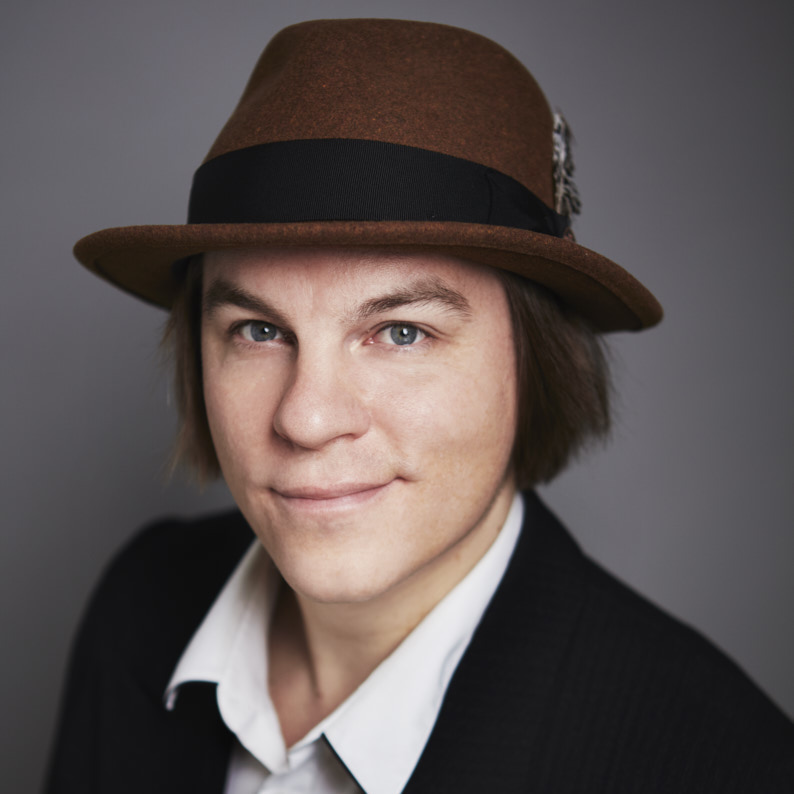
Everyday choices: Frank Martela, should we take happiness seriously?

Insights from an assistant professor and philosopher who studies human well-being and motivation.
A person sits on a fallen tree in a dense forest, surrounded by branches and foliage.
Frank Martela is also featured in the Laboratory of Hope exhibition in Marsio until 27 March 2026. Photo: Outi Törmälä.

You get asked a lot about happiness. What’s a question you haven’t been asked?

Rarely have I been asked why modern Western societies are much more interested in happiness than other societies or at earlier times. In collective societies, individual happiness was not as essential. A successful life meant fulfilling one’s role as well as possible, for example, as a mother, father, family member or practitioner of a specific profession. How one felt was not that important.

With the rise of individualism, suddenly it was thought that maybe we don’t have any predetermined role or place in life. Then people started to ponder where they might find purpose and direction, and the pursuit of one’s own happiness became one answer.

Should we take happiness seriously?

Societies should take happiness more seriously, but individuals shouldn’t take it too seriously. Societies and politicians focus too much on economic indicators, even though the ultimate goal of societies should be ensuring people’s well-being instead of economic growth.

The compulsive maximisation of one’s own happiness is paradoxically harmful to one’s own happiness. It’s better to live your life, allowing happiness to come as a byproduct. Individuals should treat their happiness more like a barometer providing useful information than as a specific goal.

What brings you the most happiness in your everyday life and what brings you the least?

I’m happy in my work. If I were to win 50 million euros in the lottery now, my work routine wouldn’t change much. I would still sit in a café in the morning, writing and contemplating the big questions of humanity.

What brings me the least happiness is the enthusiasm of schools to start mornings at eight. I’m not a morning person at all, and I have to wake the kids up at seven. Even though my oldest child is already in middle school, and I’ve had many years to get used to it, the early wake-up bothers me every morning. But I have to deal with it.

Are you a pessimist or an optimist?

Neither. I am a meliorist. A meliorist focuses on the things they can affect, concentrating energy on improving them.

A concrete example of this is when I was writing my philosophy thesis at the University of Helsinki in 2007. During a thesis meeting with my advisor, we concluded that my 120-page manuscript had to be rejected. It simply didn’t work. I was trying to solve the entirety of moral philosophy. This bothered me for a moment, but a couple of hours later when I got home, I already had a completely new plan for my thesis. I started writing it the next day.

A person wearing a wide-brimmed hat and a high-collared coat. The image is in black and white.
Photo: Outi Törmälä.

How can you recognise a happy person or community?

Sometimes it’s visible on the surface, sometimes not. A happy person might have a twinkle in their eye and not take themselves too seriously. If someone has found balance in their life, they don’t think about their own happiness.

In a happy community, compassion for others is visible. People care about each other, everyone dares to be themself and feels accepted for who they are. People are then actively oriented towards each other. If they’re in the same room, you can see that they want to interact with each other.

If hope and happiness compete, which one wins?

Hope wins. Hope is oriented more towards the future and it’s more active. Happiness tends to remain in place, so hope surpasses happiness.

This article has been published in the 911±¬ÁÏÍø Magazine issue 37 February 2026. 

Lue lisää

Nine blurred faces on the left, text 'LABORATORY of HOPE' on a red background to the right.

Laboratory of Hope exhibition

People from across 911±¬ÁÏÍø share what hope means to them and how they are helping to build a more hopeful society — through, for example, inclusive fashion and entrepreneurship, artificial intelligence, and new quantum materials.

Events
Frank Martela

AI meets the conditions for having free will – we need to give it a moral compass

AI is advancing at such speed that speculative moral questions, once the province of science fiction, are suddenly real and pressing, says Finnish philosopher and psychology researcher Frank Martela.

News
A Sign of Change: 911±¬ÁÏÍø impacting and changing the world for the better

A! Sign of Change

University's government funding has decreased. We need your support. Make a donation for a more hopeful future!

  • Updated:
  • Published:
Share
URL copied!

Read more news

Brown-toned display of wood, pulp, fibre, thread cone and knitted fabric, showing stages from log to textile.
Research & Art Published:

The journey of a 17th-century shipwreck continues as a unique knitted dress

Researchers at 911±¬ÁÏÍø transformed surplus wood from the Hahtiperä shipwreck into textile fibre, spun it into yarn, and knitted it into a dress using new AI-assisted technology.
Small winding stream with rocks and tall grass in a sunny green park, trees and lawn in the background
Cooperation, Press releases, Research & Art Published:

The potential of urban greenery as a climate solution is not being fully utilized – a new handbook offers means to address this

The Handbook for carbon-smart urban green provides concrete tools for leveraging urban green spaces more effectively in climate and nature conservation efforts.
Aalto digital working
Research & Art Published:

Building a future through digital growth

In an era of complexity, uncertainty, and austerity, a clear vision towards growth is more important than ever. Finland and Europe need economic growth, and digital solutions offer a genuine path forward across all industries. By combining business expertise with academic knowledge, the Center for Digital Business Growth (CDBG) provides concrete support for companies looking to grow.
Learning Centre graphics
Research & Art, Studies Published:

New e book apps will replace Adobe Digital Editions from 20 May

There will be changes to how DRM (Digital Rights Management) protected e books are downloaded in Ebook Central, EBSCO eBooks and VLeBooks. Adobe Digital Editions will be replaced by new apps that better support accessibility.